How to be Assertive by Speaking Fluent Body Language
You've probably heard the expressions before... "Chin up, shoulders back," "Keep your distance," "Feet on the ground," "Pain in the neck." But have you ever wondered how they came about? It all has to do with body language.Simply put, body language is the unspoken communication we all use in every face-to-face encounter with other human beings. You could say it's more powerful than anything said aloud. Ninety-three per cent of our everyday communications is non-verbal. Only 7% has to do with words at all. You could be telling that other person much more with your body language than you would ever say in words.
Determining and regulating your own body language could well mean the difference when it comes to job interviews, networking meetings, banquets and business dinners, or even a social occasion, such as a date. Even trickier is learning to read and understand the other person's body language.
Being Assertive using Body Language
The right attitude to be able to win friends is to be more assertive. Being assertive is actually just your ability to stand up for yourself, tackle issues face to face, state your own personal views, and defend others when they are being taken advantage of. Contrary to what you may think, being assertive is very much different from being bossy and overbearing.
Assertiveness is actually a good thing. Without it, you inevitably hold back in your career and your personal life. If you are usually compared to another one of your co-workers because the two of you have similar levels of experience and skills, then it is more likely that the more assertive one is rewarded with the promotion.
It is natural that some people are more assertive than others; whether you are part of the former or the latter, it does not matter. What matters is that you get to learn assertive behavior, which ensures you are in the path for new opportunities.
For you to be assertive, you have to keep in mind the effects of positive body language. It is not difficult, actually. You just need to show the person you are talking to that you are attentive and that you truly care about whatever topic it is that you are discussing.
So, you're probably asking yourself, "How do I regulate my body language to be more assertive and give a true representation of how I feel when I interact with others?"
Distance and Angles
Start with the distance between you and the person with whom you're speaking. If you get too close, people feel you're in their face, or too pushy. Too far away, and you could be seen as standoffish.
The angle of your body is a dead giveaway to others. We tend to angle our body towards those people we find friendly or interesting, and angle away from those we feel are cold or unfriendly. Crossing your arms over your chest shows defensiveness. This posture says, "I'm closed off and keeping you out."
Eye Contact
When in a conversation, you have to do everything you can to maintain eye-to-eye contact. It is believed that your eyes are the windows to your soul. Therefore, for you to be able to achieve a heartfelt and productive conversation, you have to show the other party your undivided attention.
You must not, under any circumstances, look around while the other person is talking. You have to always make sure that the person you're talking to sees that you are truly participating in your conversation by listening intently, while maintaining eye-to-eye contact.
Eye contact is one of the most important ways to communicate with others. Looking them in the eye shows respect and interest. We've all experienced the person who looks constantly at their watch, or seems to be far away and not listening to us. Their body language says, "I have other places to be and other more interesting people to talk to than you." Or the person that you know is not listening to what you're saying, but instead is busy deciding what he/she will say next. Someone whose eyes are downcast, not looking you in the eye could be exhibiting signs of shyness, or it could be deceit. Someone who is lying to you will not look you in the eye.
Head Position
The head position also says a lot. To show confidence or authority, simply keep your head level. This says, "Take me seriously, my words are important." To show friendliness and interest in what the other person is saying, tilt your head slightly to one side or the other.
For you to be able to further express that you are, in fact, approaching your conversation with respect and attention, you may lean forward. Leaning forward is a gesture that shows that you want to hear more and would want the other party to expound on what he or she has just said.
Of course, leaning backward is the opposite. It proves that you are only engaging yourself in the conversation because you have to, and not because you truly care about what is bothering the other party.
You have to prevent yourself from being pushy in your newfound relationship. You must not force your opinions and beliefs on the other party if he or she radically believes otherwise. Just let things be, accept them as how they are.
Mouth Movements
Mouth movements are easy clues to what the other person may be feeling. If they purse their lips or twist them, they could be thinking carefully about what you just said, or disagreeing with you, but holding back comment. You can certainly tell when someone is not pleased.
The Handshake
The handshake is extremely important in the communication with others. No one wants to shake a hand like a wet noodle; at the same time, a handshake needn't be a contest of strength. It's a handshake, not arm wrestling. Many people also don't quite know what to do with their hands after the handshake, especially when meeting someone new. They tend to clasp their hands together, nervously, or fiddle with their jewelry.
Just Be Assertive
Taking the initiative of beginning a conversation, or in stating your views without pushing them to the other party, is the right way for a productive and effective conversation. Do not worry about giving the other party an image that you are overly confident; for being assertive is not only about being confident, it is also about understanding other people and the empathy that you give them.
Indeed, it has been observed and proven that body language has a huge part when it comes to being assertive. Body language shows the other party that you are attentive to what he or she is saying. It is not all about looking good and speaking for yourself. It is also about making other people more comfortable when they talk and express their personal thoughts with you.
Since we're constantly sending out these powerful messages, it's clear we should make an effort to learn more about what our bodies say to others. And learning what others are really saying to us is of paramount importance in our day-to-day communications.
So, chin up, shoulders back, keep your distance, head up, eyes sharp, don't be pushy or standoffish, smile and shake that hand. You too can learn to become more assertive by speaking fluent body language.
Author: Michael Lee

 People will only follow a vision that is perfectly clear in their minds, therefore, it’s extremely important that you yourself must possess a crystal clear vision of what you want to accomplish and the direction that you want to go. If your vision is the slightest bit blurry in your mind, then how can you expect to lead people if you don’t know where you are going yourself? You must be able to see the big picture and then develop the plan on how to get there because in order to lead people, you have to keep things simple enough for them to take action on and you must be able to convey your vision to them. Develop a statement of purpose for yourself and for your company if you don’t already have one.
 Always strive to display the highest degree of integrity that you can. Integrity is simply the act of being the same on the inside as you claim to be on the outside. People want to believe that you practice in your own life what you preach to them. The lack of integrity is the reason why politicians have such a tarnished reputation today because some of them lacked the integrity that people desire from their leaders. Most people fail becoming leaders because they display a poor level of integrity. They put on a false illusion of leadership in front of their team, but after the show is over, when they are away from the spotlight, their personal lives are anything but inspirational. A true leader possesses a strong foundation from within and it’s that foundation which supports the great teams that they build.
 Rudolph Giuliani once said that a hero is not one who is fearless. A true hero is one who feels the fear and yet moves forward regardless. A leader is a hero who must be strong enough to face their fears of failing, kick it aside, and move forward anyways. Leaders realize not to cover or hide their fear, but rather, they acknowledge it like everyone else, but they also manage their fears rather than allow their fears to manage them. Remember that even the best leaders make mistakes, but what separates the great leaders from the mediocre ones is that the great leaders are willing to admit they made a mistake and they use it as a tool to create a better future for themselves and their team. Mediocre leaders, on the other hand, live in self-deceit and allow their ego to get in the way of doing what’s right for themselves and everyone who follows them. They stand firm in their decision that they’ve made, even when they know that it’s the wrong one and they would rather sink with the ship and take their team with them, rather than admit a mistake. The fear of failure is something that holds 90% of people from achieving their maximum potential in life. A true leader is one who makes a decision and moves forwards and sees failures not as failures, but as lessons for their future success.
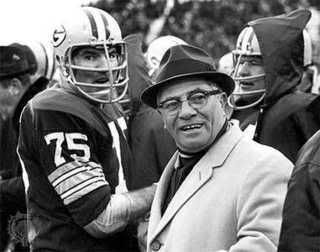 In any team sport, it’s not always the case where the team with the best players win. Exceptionally talented players are important, but it’s not as important as how those players work as a collective whole, as a single and powerful unified force. Therefore, it stands to reason that most of your time as a leader needs to be committed towards selecting, evaluating, coaching and strategically placing your players. As a leader, you must be a great team-builder because if people don’t work together on a common goal, then that mission will ultimately fail. Realize that the people that you have on your team won’t simply come together on their own.
 Leaders are learners. Our wisdom for making the right decisions is shaped and molded by our experiences in life. Leaders not only immerse themselves into experiencing as much as they can throughout life, but they also learn from the wisdom of other people as a way to leverage the time that they have. We can learn from our own mistakes and accomplishments, but we can also learn from the mistakes of others as well and it’s for this reason that leaders must be learners. Strive to maximize your own personal development by taking courses, reading books, listening to audio programs and immersing yourself into something new that will cause personal growth to happen. Leaders by their very nature have almost an obsession with personal growth because it’s from wisdom and experience that produces a higher quality decision.
 People in the position of power often forget simple manners when it comes to delegating responsibilities to their subordinates. A great leader is respectful at all times and follows the platinum rule of giving all people unconditional love and acceptance regardless of whether they deserve it or whether they want it. It’s sometimes too easy to allow positional power to go to one’s head and when that happens, that person is no longer a leader, but instead a dictator. A genuine leader is one who is compassionate towards others. They have the power of empathizing with all people and understanding how they might feel. A false leader, on the other hand, does not empathize with their people, but instead makes decisions based on what they want or what is popular or what is good for them. The greatest leaders display the quality of unconditional love. Unconditional love is the love of all people without reservation and without having them demonstrate behaviors that you want them to. Unconditional love helps the leader put aside their wants and allows them to see what is good for other people. A compassionate leader also knows that they are not above anyone else and does not treat others as if they were. They understand that they simply have a role to fulfill just as other people do and they always treat others with respect and dignity at all times.

 Posts
Posts

